Chapter 03 / Mountain access
Reaching the Upper Shore
A considered arrival leaves space for the mountain: its distances, its weather and the services that make a remote stay possible.
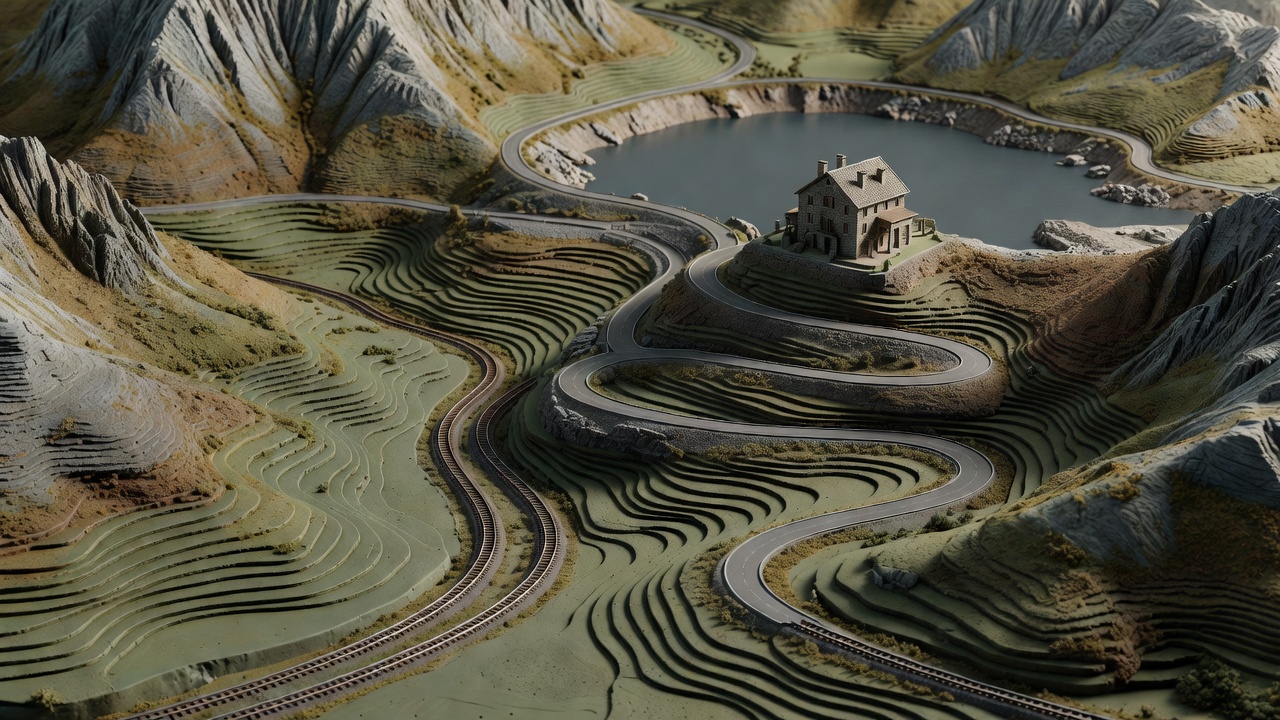
Plan the last connection first
A destination can be straightforward to reach by train and surprisingly awkward to reach after the train. Mountain hotels may depend on infrequent buses, booked transfers or a road that follows the entire length of a reservoir before crossing to the opposite bank. The straight-line distance on a map is rarely the useful distance.
Begin with the final connection and work backwards. Establish where you will be collected, whether the driver needs your arrival details, how much luggage can be carried and what happens if the train is delayed. Confirm the same arrangements for departure. A reliable return journey is part of the booking, not a detail to leave until breakfast on the last day.
Distinguish valley resorts from high reservoirs
Mountain reservoirs occupy very different altitudes and transport networks. A stay near Embrun or Savines-le-Lac, around Serre-Ponçon, belongs to a different access pattern from an excursion to Lac des Dix or the Kaprun high-mountain reservoirs. Some elevated basins are visitor destinations reached by seasonal transport rather than places with a conventional waterfront luxury hotel.
Before building an itinerary around an evocative photograph, identify the exact accommodation address. Check whether the hotel actually stands beside that reservoir, overlooks another lake, or uses the high-mountain site as a day-trip suggestion. This small distinction prevents an entire holiday from being planned around the wrong shore.
The final kilometres are not an inconvenience outside the experience. They are the first chapter of the stay.
Give each season its own itinerary
Spring can bring snowmelt, wet ground and a gap between winter and summer services. Summer generally offers a wider range of transport and activities, but busy roads, heat and afternoon storms can complicate simple plans. Autumn can be quiet and beautifully clear while daylight shortens and seasonal businesses close. Winter may transform the view without leaving the shoreline easily accessible.
These are planning tendencies, not forecasts. Ask the hotel for the operating dates of the particular road, shuttle, restaurant and activity you intend to use. A property can remain open while nearby services do not. Check again shortly before travelling, particularly where your itinerary depends on a pass road or a seasonal bus.
| Season | Possible constraint | Ask before arrival |
|---|---|---|
| Spring | Snowmelt, road work, limited services | Which routes and facilities are currently open? |
| Summer | Busy access roads, heat, thunderstorms | Can arrival and outdoor activities be timed flexibly? |
| Autumn | Reduced timetables and shorter days | What runs on the exact travel date? |
| Winter | Snow, ice and seasonal road closures | Which approach is maintained and what equipment is required? |
Make a car-free stay practical
Rail can make the long part of the journey restful, especially when paired with a well-organised transfer. SNCF, SBB and ÖBB provide useful starting points for journeys in France, Switzerland and Austria. Their networks do not, however, imply frequent service to every mountain shore. Consult the relevant regional operator as well as the national timetable.
Think beyond arrival. Can you reach dinner, a village, a supervised bathing area or a walking trail without hiring a car? Does the hotel offer a shuttle only at fixed times? Are taxis available on demand or only by advance arrangement? A car-free trip becomes comfortable when these small movements are planned with the same care as the main train.
Describe your access needs precisely
Mountain access is not only a question of vehicles. Gravel, gradients, long ramps and exposed steps can affect the route between a car park and reception. Luggage assistance may help one traveller while another needs a continuous step-free path. Accessible accommodation must be considered as a chain of usable spaces, not a single room label.
Explain what you need in practical terms and request a specific response. Ask about drop-off distance, door widths where relevant, lift availability and the route to shared facilities. If a transfer is involved, confirm the vehicle and equipment directly. A clear conversation before booking is more dependable than a broad statement that everyone is welcome.
Keep a weather alternative
A luxury stay should still work when the planned boat outing or high path is unavailable. Look for indoor spaces with daylight, sheltered outdoor seating and meals that do not require a difficult drive. Leave some unstructured time rather than making every day depend on a weather-sensitive excursion.
For conditions, use the appropriate national weather service, road authority and local operator notices. Météo-France, MeteoSwiss and GeoSphere Austria are starting points, not substitutes for local closure information. Reservoir banks, dam structures and service roads are not automatically public walking routes. Follow signs and barriers even when the landscape appears calm.
With the journey resolved, turn to the wider catchment. How you arrive is one part of the impact of the stay, alongside the building’s energy, water and everyday operations.